top of page


DAY 00.JAN - 00:00
Speakers | TBD
Join us for an informative panel discussion that explores the practical aspects of implementing AI in organizations. AI adoption is a transformative journey that requires careful planning, overcoming challenges, and learning from real-world success stories. This panel will provide valuable insights for those looking to harness the power of AI in their businesses.
Panel Topics:
AI Implementation Strategies: Discover effective strategies for identifying AI use cases, selecting the right technology, and developing a roadmap for successful implementation.
Data Readiness: Explore the importance of data quality, availability, and governance in AI initiatives.
Change Management: Discuss the cultural and organizational changes needed to foster AI adoption and innovation.
AI Integration: Learn how to seamlessly integrate AI solutions into existing workflows and systems.
Measuring ROI: Understand how to quantify the return on investment (ROI) and value created by AI implementations.
Challenges and Pitfalls: Identify common challenges and pitfalls in AI projects and strategies to mitigate them.
Ethical Considerations: Delve into the ethical and responsible use of AI in business and its impact on stakeholders.
Success Stories: Hear from organizations that have successfully implemented AI, showcasing real-world examples and lessons learned.
Why Attend: This panel will provide practical insights and guidance for organizations at various stages of their AI journey. Whether you are a business leader, a technology enthusiast, a data professional, or simply interested in the implementation of AI, this discussion will offer valuable takeaways for making AI work effectively within your organization.
Don't miss this opportunity to gain a deeper understanding of the strategies, challenges, and success stories associated with implementing AI in the corporate world!

DAY 00.JAN - 00:00
Speakers | TBD
AI for Good - An exploration of use cases
Session curated by ImpactScope
11.00 to 11.05
Sean Murphy – ImpactScope – Opening words and introduction
11.05 to 11.15
Diana Rose – Insig AI – Transparency and disclosure index
11.15 to 11.25
Michele Soavi – ImpactScope – GWI: detecting greenwashing instances
11.25 to 11.35
Fred Werner – UN ITU – The AI for Good initiative
11.35 to 11.50
Panel: Identifying AI for Good use cases
Speakers: Diana Rose (Insig AI), Fred Werner (UN ITU), Michele Soavi (ImpactScope)
More speakers soon.

DAY 00.JAN - 00:00
Speakers | TBD
Immerse yourself in the critical topic of ocean conservation at the unDavos Oceans Panel. This event features marine biologists, environmentalists, policy makers, and advocates dedicated to the health and sustainability of our oceans. It's a deep dive into the challenges, innovations, and collaborative efforts needed to protect and preserve our marine environments.

DAY 00.JAN - 00:00
Speakers | TBD
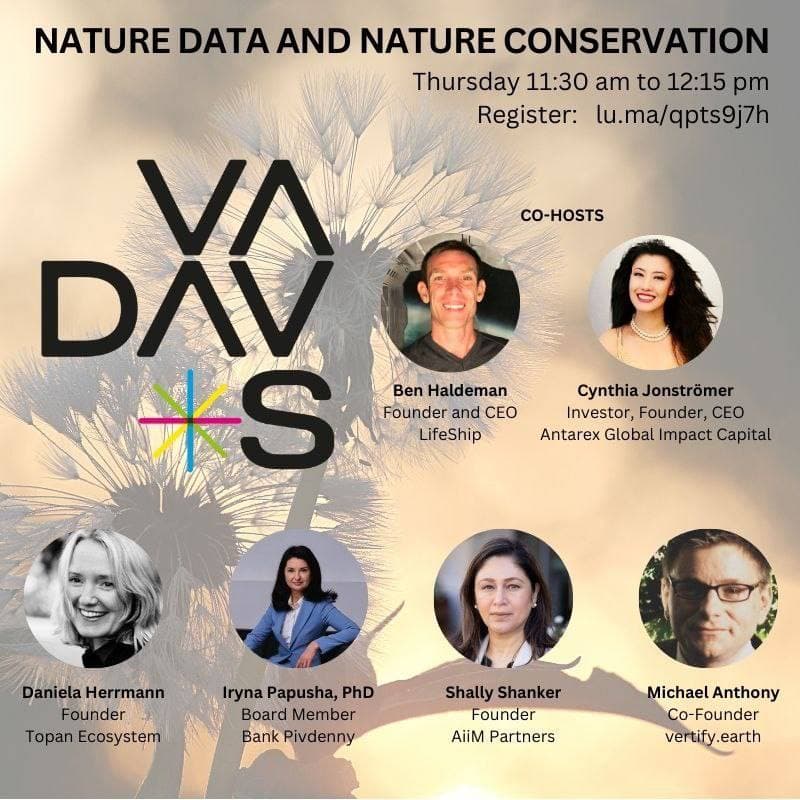
Nature conservation (including indigenous practices) are vital for maintaining the health of our planet and the wellbeing of all its inhabitants, including us humans. Collecting nature data supports these efforts by providing the necessary information for effective management and conservation strategies.
• Biodiversity Preservation: Conserving nature helps protect the vast array of species living on Earth, each playing a unique role in the ecosystem. Biodiversity ensures ecological balance and the resilience of ecosystems.
• Climate Regulation: Natural ecosystems like forests, oceans, mangroves, peatland and wetlands play a critical role in regulating the climate by absorbing carbon dioxide, a major greenhouse gas.
• Sustenance of Human Life: Humans rely on nature for food, water, medicine, and raw materials. Healthy ecosystems are essential for clean air and water, soil fertility, and pollination of crops.
• Cultural and Spiritual Values: Nature is deeply intertwined with the culture and spirituality of many communities, especially indigenous peoples. Their traditional practices often contribute to the sustainable management of natural resources.
• Scientific Understanding and Education: Nature offers endless opportunities for scientific research, learning, and inspiration. Understanding nature is crucial for developing sustainable technologies and practices.
Collecting nature data is imperative. AI would play an important role here:
• Monitoring Changes: Climate change would cause even more Climate refugees. The consequences would create resource scarcity, social and political challenges, and potentially wars. Data helps in monitoring changes in ecosystems, species populations, climate patterns, and the impact of human activities.
• Informed Decision Making: Accurate data is essential for making informed conservation decisions and policy formulations.
• Identifying Threats: Continuous data collection helps identify emerging threats to biodiversity, such as new invasive species or disease outbreaks.
• Evaluating Conservation Strategies: Data allows for the evaluation of the effectiveness of conservation strategies and the need for adjustments.
• Raising Awareness: Human are biased and emotional. Imperative Data and its analysis can help in raising public awareness about the state of the environment and the importance of conservation efforts.
Indigenous practices are important in nature conservation, however is often being ignored. Indigenous practices offer many invaluable contributions, such as:
• Traditional Knowledge: Indigenous communities possess extensive knowledge about their local environments which was gained over generations. This knowledge is invaluable in understanding complex ecosystems and managing them sustainably.
• Sustainable Practices: Many indigenous practices are inherently sustainable, evolved to live in harmony with nature. They offer models for resource use that do not deplete these resources over time.
• Stewardship of the Land: Indigenous peoples have historically been stewards of their lands, often managing them in ways that maintain and enhance biodiversity.
Collecting nature data is imperative. AI would play an important role here:
• Monitoring Changes: Climate change would cause even more Climate refugees. The consequences would create resource scarcity, social and political challenges, and potentially wars. Data helps in monitoring changes in ecosystems, species populations, climate patterns, and the impact of human activities.
• Informed Decision Making: Accurate data is essential for making informed conservation decisions and policy formulations.
• Identifying Threats: Continuous data collection helps identify emerging threats to biodiversity, such as new invasive species or disease outbreaks.
• Evaluating Conservation Strategies: Data allows for the evaluation of the effectiveness of conservation strategies and the need for adjustments.
• Raising Awareness: Human are biased and emotional. Imperative Data and its analysis can help in raising public awareness about the state of the environment and the importance of conservation efforts.
DAY 00.JAN - 00:00
Speakers | TBD
The format is facilitated speed networking with small groups of 4-5 people gathered in a ‘Davos Shuttle’ seating space to have the classic Davos networking and pitch experience. There is no tech support - and no opportunity to speak or pitch to the group – the classic Davos way works exceptionally well to establish meaningful productive relationships.
Please arrive 5 – 10 min before your Track starts. You would be offered a colored badge based on the information you provided at the signup.

bottom of page